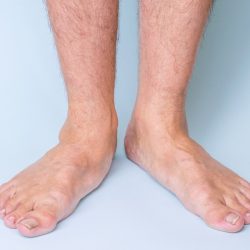
What is Flat Feet (Pes Planus)?
Flat feet, or pes planus, occur when the arch of the foot collapses, causing the entire sole to make contact with the ground. This condition can be present from birth or develop over time due to factors such as injury, aging, or medical conditions.
While some individuals with flat feet experience no symptoms, others may develop foot pain, overpronation (excessive inward rolling of the foot), and increased strain on the ankles, knees, and lower back. These issues can lead to discomfort, fatigue, and altered walking mechanics, particularly after prolonged standing or physical activity.
Causes of Flat Feet
Flat feet can be congenital (present from birth) or acquired (developing over time due to external factors or medical conditions). The underlying causes vary, but they all contribute to a loss of arch support and structural instability in the foot.
Congenital Flat Feet
- Some individuals are born with naturally low or absent arches due to hereditary factors.
- In infants and young children, flat feet are common as the arches are still developing. While many children naturally develop arches as they grow, some retain a flat-footed structure into adulthood.
- Congenital flat feet may be flexible, meaning the arch appears when the foot is lifted but flattens when weight-bearing, or rigid, where the arch remains collapsed in all positions.
Acquired Flat Feet
Flat feet can develop over time due to factors that weaken the foot’s arch support structures, including:
- Aging – The tendons and ligaments supporting the arch weaken with age, leading to progressive flattening of the foot.
- Foot or ankle injuries – Fractures, sprains, or tendon damage (especially to the posterior tibial tendon) can contribute to arch collapse.
- Overuse and repetitive strain – Prolonged standing, high-impact activities, and excessive walking or running on hard surfaces can place stress on the arches.
Medical Conditions Linked to Flat Feet
Certain medical conditions can contribute to the development of flat feet (fallen arches), including:
- Arthritis – Inflammatory conditions such as rheumatoid arthritis can cause joint and ligament damage, leading to arch collapse.
- Diabetes – Nerve damage (neuropathy) associated with diabetes can weaken foot muscles and reduce arch support. If you have diabetes and are experiencing symptoms of flat feet, book an appointment for a diabetes assessment today.
- Obesity – Excess body weight increases strain on the foot’s arch, leading to gradual flattening over time.
- Muscle and nerve disorders – Conditions such as cerebral palsy and muscular dystrophy can affect muscle strength and foot posture, leading to flat feet.